
Garden Cultivators
-
Garden cultivators are a practical choice for those who want to loosen soil more easily, prepare the ground and maintain beds with less effort. If you are looking for a solution based on workload, power and ease of use, this category helps you compare different models and choose the right option for your garden or vegetable plot.
1 - 25 of 25Price 415.00 € VAT incl.499.00 €You save 84.00 €Price 439.00 € VAT incl.529.00 €You save 90.00 €Price 439.00 € VAT incl.529.00 €You save 90.00 €Price 499.00 € VAT incl.599.00 €You save 100.00 €Price 499.00 € VAT incl.599.00 €You save 100.00 €Price 499.00 € VAT incl.599.00 €You save 100.00 €Price 499.00 € VAT incl.599.00 €You save 100.00 €Price 683.00 € VAT incl.759.00 €You save 76.00 €Price 683.00 € VAT incl.759.00 €You save 76.00 €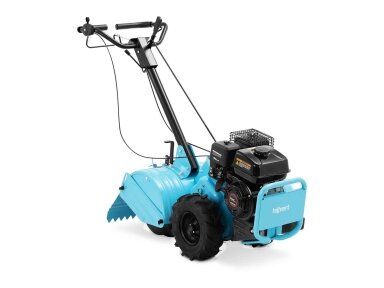
 Gasoline Cultivator - 6.5 HP - 2 gears (forward and reverse) - 450 mm, Hillvert HT-RTT-650Code: EX10090354Price 1495.57 € VAT incl.Price 399.00 € VAT incl.
499.00 €You save 100.00 €Price 399.00 € VAT incl.499.00 €You save 100.00 €Price 479.00 € VAT incl.610.00 €You save 131.00 €Price 479.00 € VAT incl.599.00 €You save 120.00 €Price 479.00 € VAT incl.610.00 €You save 131.00 €Price 479.00 € VAT incl.610.00 €You save 131.00 €Price 719.00 € VAT incl.878.00 €You save 159.00 €Price 719.00 € VAT incl.878.00 €You save 159.00 €Price 499.00 € VAT incl.599.00 €You save 100.00 € -
What is a cultivator for and when is it useful in the garden?
A cultivator is used for loosening soil, preparing ground before planting and maintaining beds during the season. It helps break up compacted soil, improve preparation for planting and make routine work easier in situations where manual processing would take more time and physical effort. For this reason, cultivators are chosen both for smaller gardens and for larger areas where more efficient soil work is needed.
A garden cultivator can be useful not only in spring when preparing the soil, but also later for maintaining beds and helping control weeds between rows. A properly selected model makes it easier to work in different-sized areas and adapt to real gardening needs. That is why it is worth looking not only at price, but also at soil type, plot size and expected frequency of use.
How to choose a garden cultivator
When choosing a garden cultivator, it is worth starting with working width and depth. The larger the area, the more useful a wider working width can be, helping complete the job faster. Depth also matters because it affects how intensively the soil is loosened and how well the machine adapts to different tasks.
Power is equally important. If the soil is lighter and regularly maintained, a simpler model is often enough. If the ground is denser or less frequently worked, a more powerful cultivator is usually the better choice for steadier and more efficient operation. Weight and maneuverability are also important, especially if the garden has narrow passages, beds or limited turning space.
For some users, gears and additional attachments are relevant if these options are available on a specific model. It is also useful to consider how large the working area is and whether the cultivator is intended mainly for regular seasonal use or for more intensive work. When comparing garden cultivators, it is worth looking not only at technical parameters, but also at overall working comfort.
For smaller gardens and greenhouses
For smaller gardens and greenhouses, lighter and more maneuverable models are often more convenient. In such situations, it is important that the cultivator is easy to control, does not take up too much space and allows more precise work in narrower areas between beds or plant rows.
For larger areas
For larger areas, more efficient solutions are more often chosen, where power, work stability and reliability during longer use become more important. If the machine will be used regularly over a bigger area, it is worth choosing a model that offers better efficiency and greater comfort throughout the season.
Cultivator price – what does it depend on?
Cultivator price usually depends on several main factors. Power is one of the most important because it affects performance and the type of work the machine is better suited for. Price is also influenced by working width, included equipment, design features, brand and warranty conditions.
When evaluating price, it is worth looking not only at the initial amount, but also at how well the model matches the intended use. If the cultivator will be used more often, for longer periods or in more demanding conditions, it is often worth choosing a more reliable and versatile option. In that case, not only price matters, but also the overall long-term value.


